
Frontier Nagaland: Autonomy, Devolution — Within India’s Sovereignty—and an Election, Addressed
A political message in the language of governance.

Author credentials
KBS Sidhu, IAS (retd.), served as Special Chief Secretary to the Government of Punjab. He is the Editor-in-Chief of The KBS Chronicle, a daily newsletter offering independent commentary on governance, public policy and strategic affairs.
Autonomy, Devolution — Within India’s Sovereignty
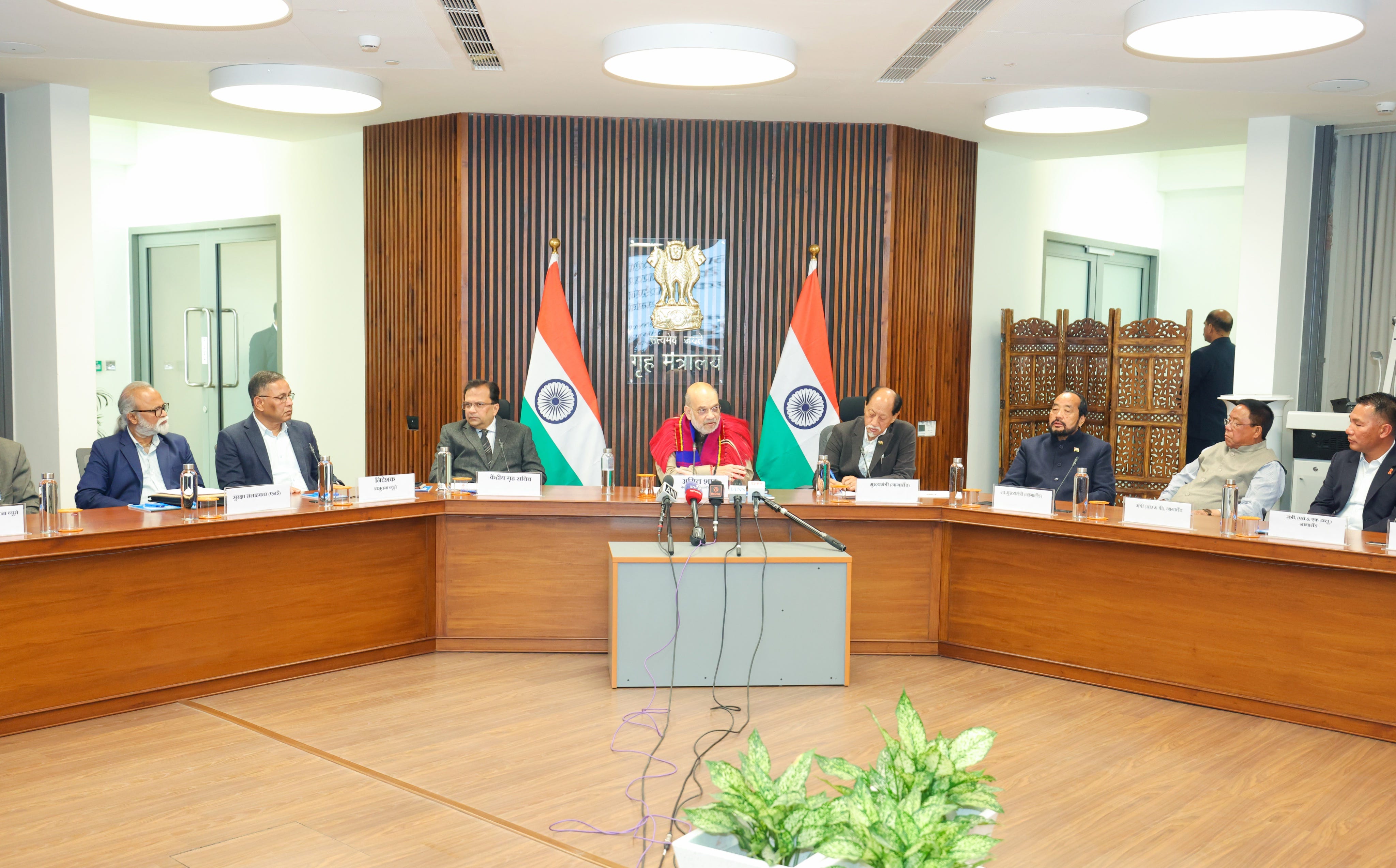
The new tripartite agreement , inked on Februray 5, creating the Frontier Nagaland Territorial Authority (FNTA) is, above all, a pre-election political statement dressed as institutional innovation. On paper, it is substantial: enhanced autonomy, a mini-secretariat headed by an Additional Chief Secretary or Principal Secretary, devolution of 46 subjects, and a ring-fenced development flow for six chronically neglected eastern districts — Mon, Tuensang, Kiphire, Longleng, Noklak and Shamator. The Centre’s commitment to a fixed annual allocation and to meeting initial establishment costs through the Ministry of Home Affairs cleverly positions New Delhi as both guarantor and funder, while carefully avoiding the one move that would trigger immediate regional backlash: any redrawing of state boundaries.
Politically, this is textbook “fight to the poll” signalling. The ruling dispensation can claim it has resolved a long-pending grievance, point to a broader record of agreements in the Northeast, and contrast promised “implementation in letter and spirit” with the allegedly symbolic peace-making of earlier eras. For the Eastern Nagaland People’s Organisation (ENPO), which has pressed for a separate “Frontier Nagaland” since 2010, the arrangement is a compromise that monetises and institutionalises grievance without formally abandoning the idea of a distinct political identity.
Whether FNTA becomes meaningful autonomy or remains a sophisticated pre-poll sop depends on how one places it against the longer arc of Naga political history — a story that began long before the word “Nagaland” entered the constitutional vocabulary.
From village republics to a managed frontier
Before colonial rule, the Naga hills were not a single political unit but a mosaic of village-republics: local sovereignty anchored in customary authority, clan networks, and intimate ties between land, identity and governance. There was no centralised kingdom claiming the Nagas as subjects. Authority was layered, local, and fiercely rooted.
British expansion into Assam transformed these hills into an administered frontier in the nineteenth century. The colonial approach was strategic and minimalistic: secure tea districts and routes, contain turbulence, and govern the hills through a mixture of indirect engagement and legal exceptionalism. The result was a frontier status that simultaneously insulated and marginalised the Nagas — protecting customary space while deepening a sense of distance from the plains and from the logic of mainstream provincial governance. That paradox later nourished two enduring narratives: the claim of a “unique history” and the grievance of being perennially misgoverned from distant capitals.
Independence and the birth of an uncompromising nationalism
In the shadow of independence, Naga nationalism crystallised into a direct challenge: not merely autonomy, but separate political existence. Declarations and mobilisations were followed by the emergence of underground structures, met by state coercion, militarisation, and the long shadow of exceptional security frameworks.
Early accords offered degrees of autonomy, but they were read through incompatible expectations. For Delhi, they preserved the Union’s integrity while offering special safeguards. For sections of Naga leadership, they fell short of recognition of sovereign equality and appeared as staged absorption. This mismatch became a recurring template: elastic text, incompatible end-states, and implementation judged not by administrative gains but by the distance travelled towards maximal political aspiration.
Statehood: a generous arrangement that did not settle the question
The movement from district administration to statehood was itself a major political accommodation. The creation of Nagaland as a full state, coupled with constitutionally protected safeguards for customary law and local control over land and resources, represented an unusually generous asymmetric arrangement.
Yet statehood did not end insurgency. For hardline groups, it was a diversion from sovereignty; for others, it was necessary but incomplete. The deeper demand for integrating all Naga-inhabited areas into a single political unit continued to collide with constitutional red lines and with the fierce resistance of neighbouring states. In effect, the constitutional offer addressed governance, while the insurgent imagination demanded political finality on identity and territory.
Shillong, splits, and the rise of competing “representatives”
The Shillong Accord sought to draw a line under armed struggle. Its political failure, however, flowed from two structural problems that would haunt future processes.
First, representation: key leaders and cadres were not party to the accord and denounced it as a sell-out, turning the agreement into a fracture point rather than a closure. Second, sequencing: disarmament came to be seen as Delhi’s end point, while many Nagas read it as the beginning of a deeper political compact that never followed in a meaningful way.
The subsequent formation of new insurgent organisations — and later splits within them — made the idea of “the Naga voice” increasingly contested. Every agreement thereafter carried a built-in vulnerability: signed by some, rejected by others, and therefore condemned to become provisional.
The long ceasefire era and the problem of permanent negotiation
The ceasefire and talks with major factions inaugurated a long phase of negotiation without final settlement. This period produced an odd equilibrium: dialogue continuing, violence punctuated rather than ended, and parallel systems of authority persisting through informal taxation and factional control.
The celebrated Framework Agreement of the mid-2010s was presented as historic precisely because it recognised uniqueness while promising a mutually acceptable solution. But its very opacity — helpful for signature — became a source of friction, as different parties projected incompatible meanings onto the same text. The result was familiar: hope at the announcement, exhaustion in the aftermath, and a widening gap between political theatre and on-ground transformation.
Why Naga agreements repeatedly falter
Across decades, four reasons recur in the unravelling or stalling of accords:
Divergent end-states: Delhi seeks robust autonomy within the Union; core insurgent narratives are built around sovereignty and territorial unification. Language can postpone the contradiction, not eliminate it.
Factionalism and representation: Agreements have been vulnerable to the charge that they were signed by “some” Nagas, not “the Nagas”. Splits turn every settlement into a contested legitimacy exercise.
Implementation deficits: Clauses promising future dialogue and institutional change often remain delayed, diluted, or politically deprioritised, eroding trust and feeding cynicism.
External constraints: Neighbouring states’ resistance to boundary change sharply narrows the room to accommodate territorial imagination, encouraging administrative tinkering in place of deeper political restructuring.
FNTA: a sub-state innovation with carefully drawn limits
Placed in this longer trajectory, FNTA is not a grand settlement of the Naga political question. It is a sectoral, sub-state experiment designed to address Eastern Nagaland’s specific grievance: chronic neglect and political marginalisation, articulated for years through ENPO’s demand for a separate state.
The architecture is telling. It offers devolution over 46 subjects, a dedicated administrative spine, and predictable funding. Yet it does so while signalling two constraints. First, it does not disturb existing constitutional safeguards, implying continuity rather than rupture. Second, the very design suggests a political bargain: deliver dignity and development without conceding cartographic change.
Reports of a review horizon — effectively a built-in renegotiation moment — make the agreement politically versatile. If FNTA performs, it can be consolidated as proof that autonomy within the state is sufficient. If it disappoints, it becomes a platform for renewed demands, now backed by an institutional narrative of “we tried, and it failed”.
What would success actually look like?
There is reason for cautious optimism. Eastern Nagaland’s demand has never been only about maps; it is also about dignity, voice, and basic development outcomes. A locally anchored authority with real control over core sectors, a fair share of outlay, and visible central backing could materially shift trajectories in infrastructure, health, education, and connectivity. If implemented honestly, it could also reduce the emotional fuel that sustains secessionist sentiment.
But history insists that optimism remain restrained. Every major moment in the Naga story — statehood, accords, ceasefires, framework declarations — has at some point been described as “historic”, only to be followed by fresh disillusionment.
So FNTA will not ultimately be judged by press notes or launch ceremonies, but by measurable lived change: roads that actually get built, schools and hospitals that actually function, extortion rackets that actually recede, and an authority in Mon or Kiphire that feels genuinely responsive and locally accountable.
The real political challenge: coherence, not announcement
For Delhi, the deeper challenge is coherence: aligning an ENPO-centric autonomy arrangement with the still-unfinished negotiations involving other Naga groups and factions, so that autonomy does not become a patchwork of overlapping authorities and competing claims.
For Kohima, the challenge is psychological and political: embracing devolution without reading it as the erosion of statehood, and managing the inevitable anxieties in non-eastern areas that they may be left behind in a new competition for central flows.
If FNTA evolves into a genuinely empowered and accountable layer of governance, the agreement signed in New Delhi may, in retrospect, be seen as a modest but meaningful turning point — not the end of the Naga question, but a rare instance where an accord moved from parchment to practice. That possibility justifies hope. The long, bruised history of broken promises demands that the hope remain cautious.