
Somnath: Temple, Trust, and Tradition
The spiritual centre—and the organised stewardship—behind a timeless pilgrimage.


Author credentials:
KBS Sidhu is a retired IAS officer and former Special Chief Secretary to the Government of Punjab.
Marking a Millennium of Somnath Mandir’s Resilience
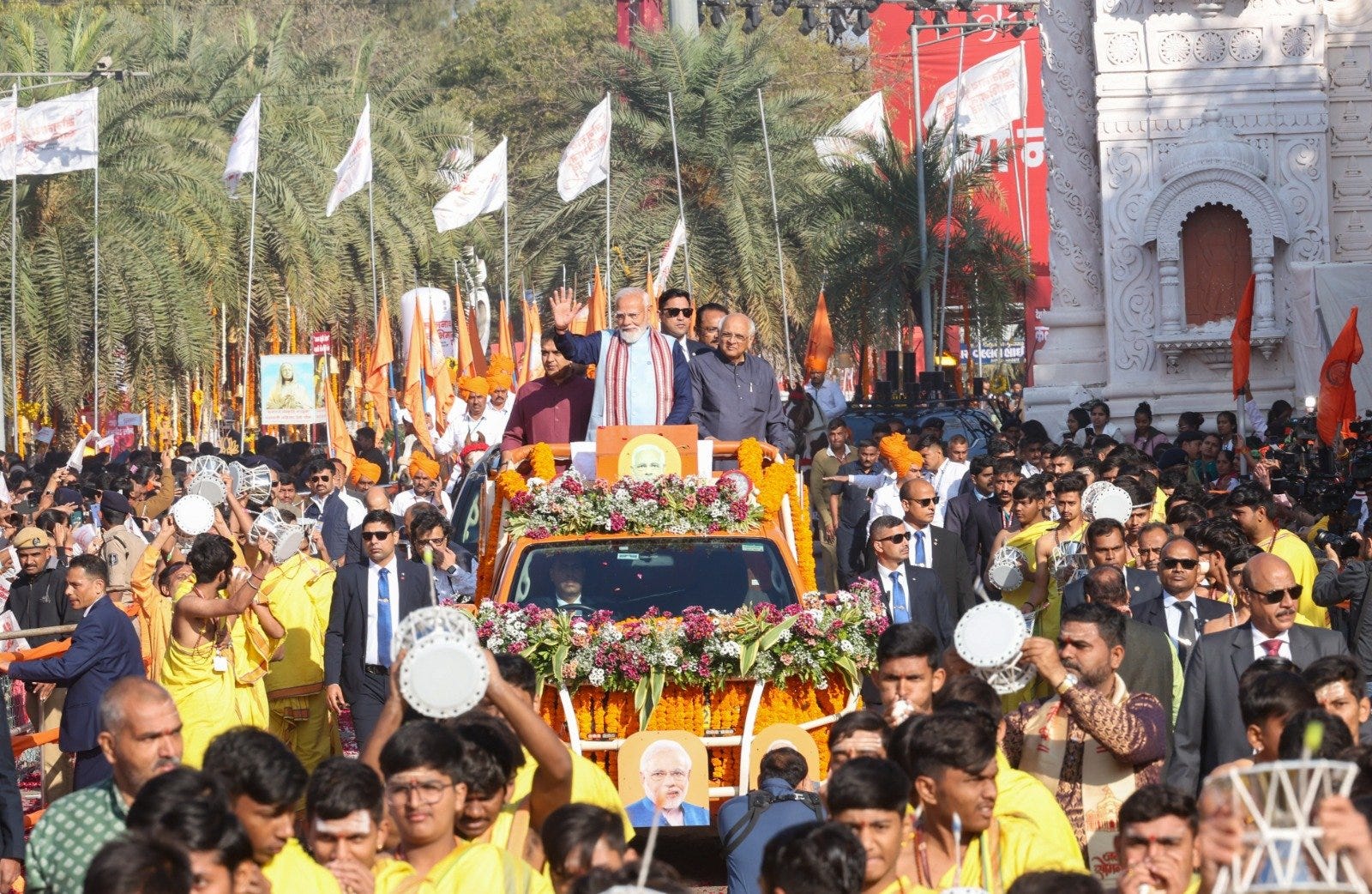
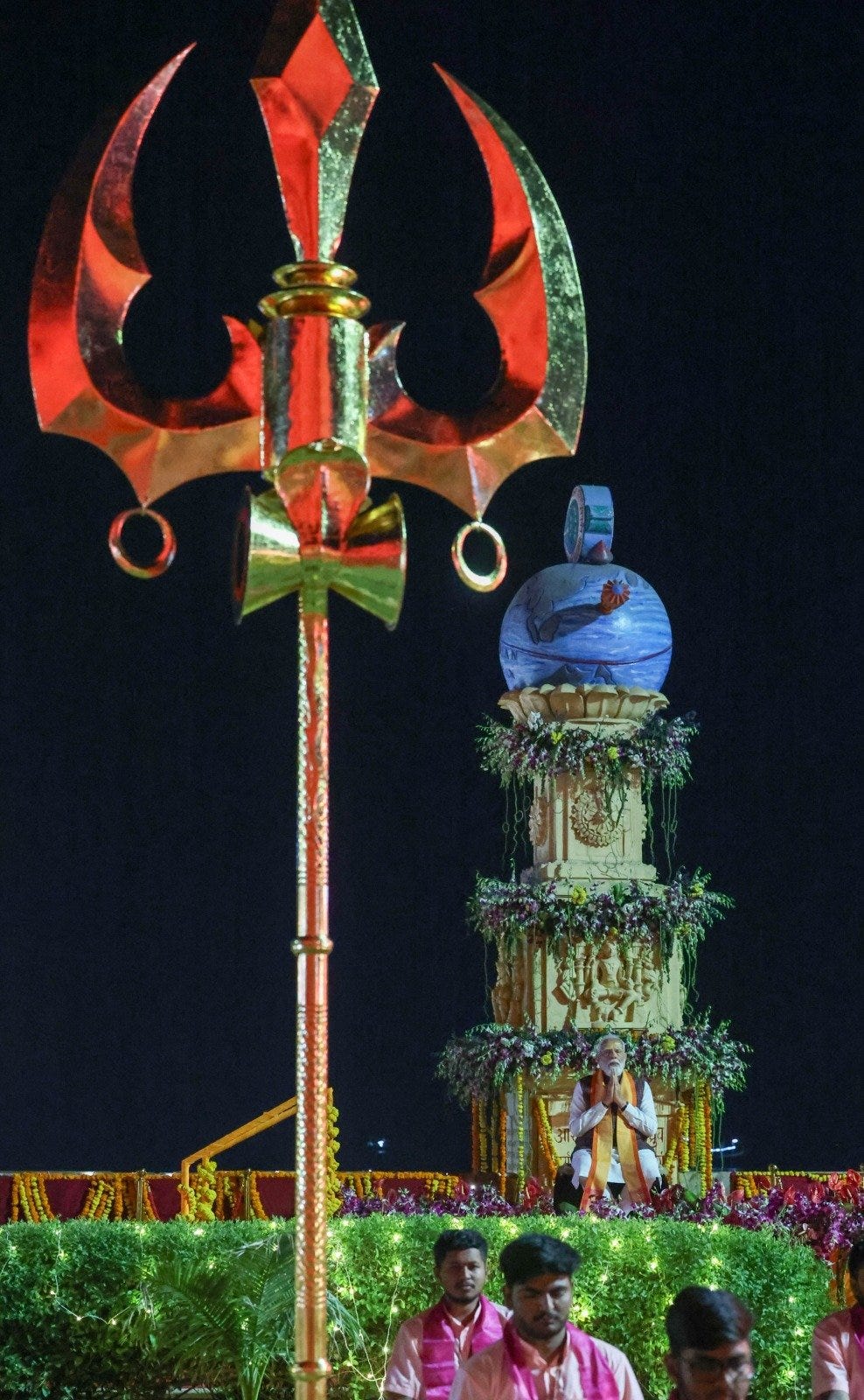
When Prime Minister Narendra Modi joined the Somnath Swabhiman Parv, walked in the Shaurya Yatra and offered prayers at the Somnath Mandir, the images were designed to stir many layers of emotion. Devotional fervour, civilisational pride, nationalism, and a sense of historical vindication all converged on the seafront jyotirlinga at Prabhas Patan, Gujarat. Alongside this moving public moment, there is also value in understanding—quietly and respectfully—the institutional stewardship that sustains Somnath’s daily religious life and its wider charitable and developmental responsibilities, including the manner in which its substantial resources are administered and accounted for.
This article seeks to place two aspects side by side: the institutional character of Somnath’s management and the broad scale of its finances. The intention is not to diminish the shrine’s spiritual or cultural significance in any way, but to affirm that precisely because Somnath has become a national symbol—and is presently chaired by the sitting Prime Minister—its systems of governance, accountability, and financial propriety merit calm, informed attention in the spirit of public trust.
Who Actually Runs Somnath?
Contrary to a common impression, Somnath is not run by a statutory Board directly created by Parliament or the Gujarat Assembly. The shrine is managed by Shree Somnath Trust, a public religious and charitable trust registered under Gujarat’s trust and charity law. In legal terms, it is neither a government department nor a private family trust, but a public trust recognised by tax and charity authorities as a charitable/religious institution.
The Central Government has specifically notified “The Somnath Temple managed by Shree Somnath Trust” for the purposes of income-tax exemptions under provisions such as section 10(23C). GST and registration records describe it as an ordinary registered trust entity, not as a creature of special legislation. That means Somnath is governed by general public trust law, under the supervision of the state charity commissioner, and is expected to function in a fiduciary manner on behalf of the public, not private owners.
At the same time, the Trust’s composition ensures a very strong government and political presence. The Trust typically has eight trustees, including a chairman and a secretary, with both the Union and State governments empowered to nominate trustees. This structure, dating back to the early post-Independence reconstruction, was consciously crafted to tie Somnath’s management to national leadership while still keeping it formally outside direct state ownership.
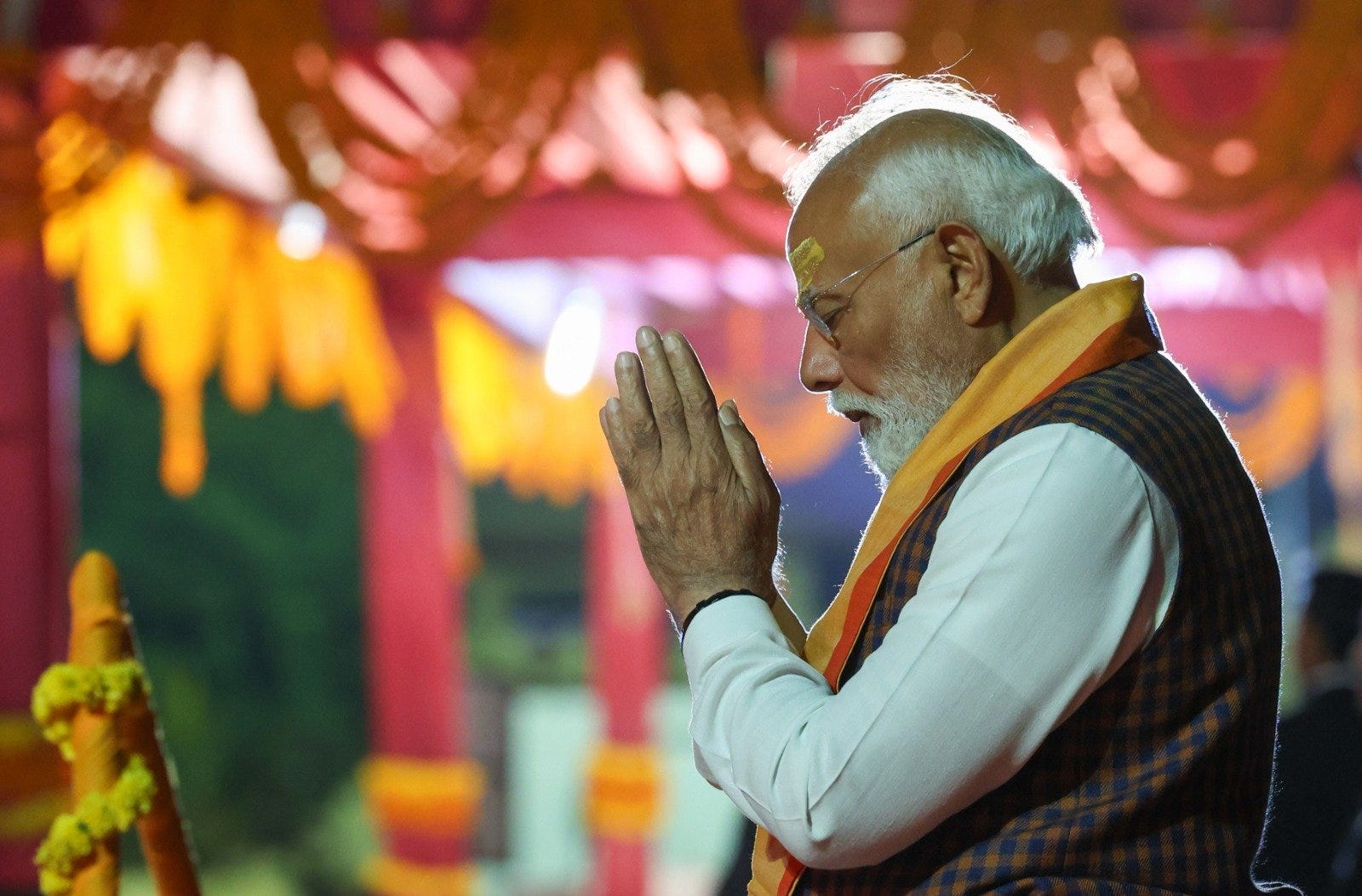
The Current Leadership
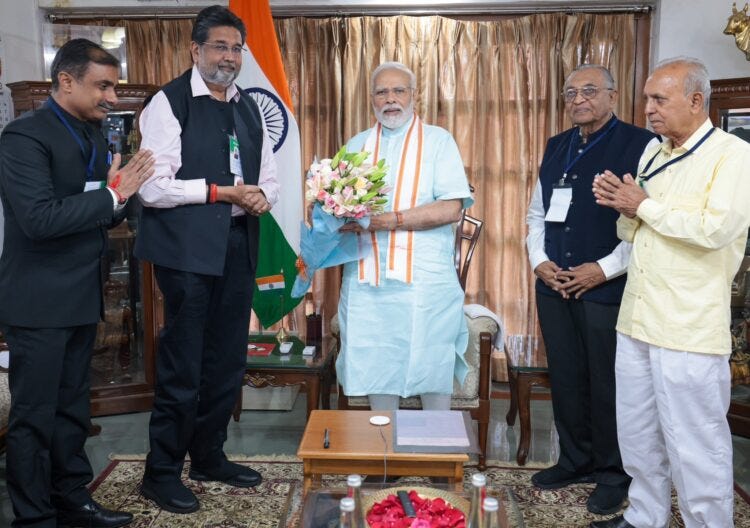
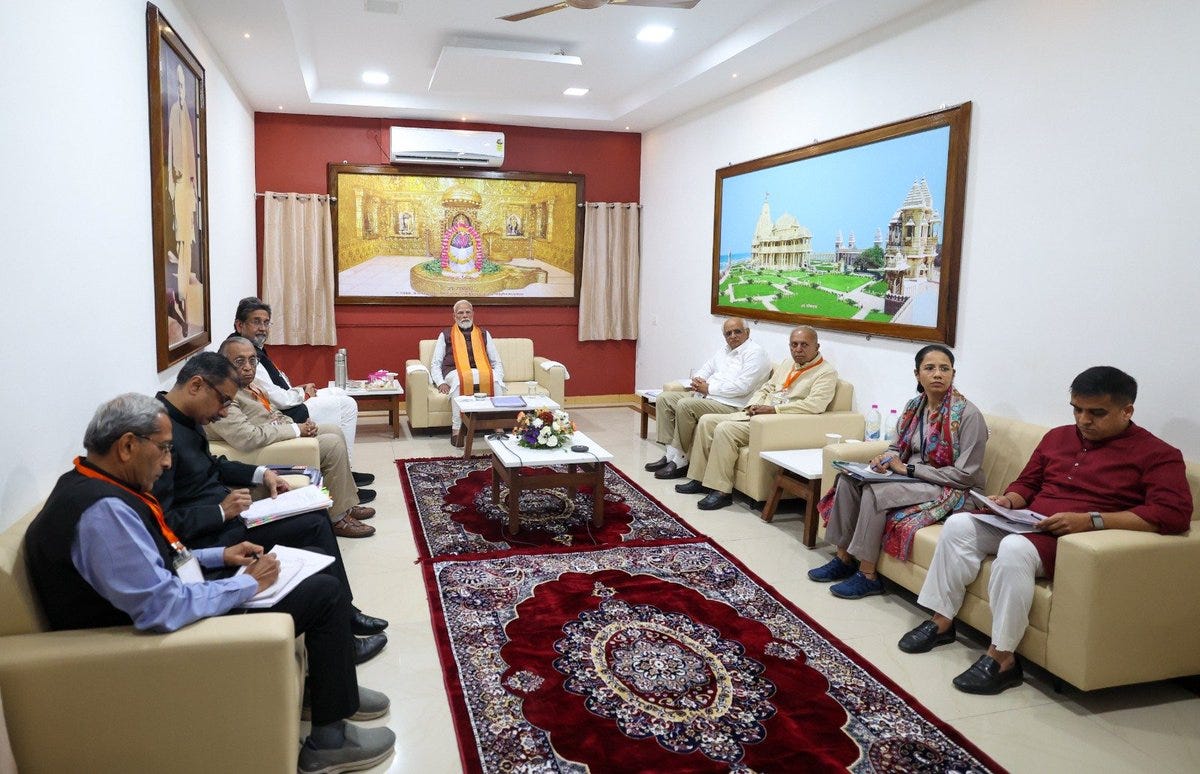
Today, the institutional and political dimensions converge in a particularly visible way. Narendra Modi, Prime Minister of India, serves as the Chairman of Shree Somnath Trust. He was first appointed in 2021 and, following an amendment to the Trust deed in 2023 (cleared by the charity authorities), now holds a five-year term as chairman.
Alongside him sit a group of trustees who collectively reflect political, bureaucratic, industrial and local scholarly influence:
L. K. Advani, BJP veteran and former Deputy Prime Minister.
Amit Shah, Union Home Minister.
Harshvardhan Neotia, industrialist (Ambuja Neotia Group).
Vishad Mafatlal, industrialist.
Pravin K. Laheri, former IAS officer, who functions as Trustee-Secretary and is effectively the key administrative anchor.
J. D. (Jivan) Parmar, retired Sanskrit professor from Veraval, providing local and scholarly linkage.
This line-up makes clear that Somnath is managed by a public trust with a very high degree of political and governmental representation, rather than by hereditary priests or an autonomous religious body alone. It also means that while chairmen and trustees will inevitably change with time and politics, the Shree Somnath Trust remains the enduring legal custodian, responsible in law and equity for the shrine’s affairs.
A High-Revenue Shrine With Large Assets
Once this institutional frame is understood, the next logical question is: how large is the financial universe over which this Trust presides? Here, the picture is less current, but still revealing.
A 2016 report based on the Trust’s 2014–15 accounts provides one of the clearest snapshots. It shows:
Annual revenue (2014–15): about Rs 31.06 crore, up from Rs 21.77 crore in the previous year.
Total expenditure (2014–15): about Rs 18.35 crore, up from Rs 13.46 crore in 2013–14.
These are conservative figures for that time, and subsequent growth in pilgrim footfall and tourism almost certainly means the current revenue is considerably higher. A 2016 profile of the Trust also mentioned an annual budget of roughly Rs 132 crore, including the shrine and its wider institutional activities, though this may aggregate several heads such as operations, projects, maintenance and social initiatives.
The Trust’s asset base is even more striking. For 2014–15, the same financial report notes:
Immovable property (temples, buildings, land etc.):
Valued at approximately Rs 113.38 crore as of 31 March 2015, up from about Rs 103 crore the previous year.
Investments (which would typically include bank deposits, FDRs and similar instruments):
About Rs 19.24 crore as of 31 March 2015, up from Rs 12.67 crore the previous year—a jump of roughly Rs 6.57 crore within one year.
There is no publicly available line-by-line breakup listing specific banks, account numbers or individual fixed deposits, but the category “investments” clearly reflects surplus funds parked in financial instruments. It is reasonable to infer that by now, with higher pilgrim numbers and expansion of facilities, both the income and investment figures would be substantially larger than the 2015 snapshot, though exact updated numbers are not in the open domain.
Land, Outreach and Expansion
Beyond the temple precincts, the Trust’s footprint is extensive. A profile notes that Shree Somnath Trust:
Manages Somnath Mandir plus 64 other temples in and around Prabhas Patan.
Holds around 2,000 acres of land, including pilgrims’ facilities, guest houses and ancillary properties.
Uses its funds for various religious, cultural, and social projects, including new temples and infrastructural expansions in the Somnath complex.
The Trust also emphasises its social activities—such as medical facilities, educational initiatives, dharamshalas and relief work—financed out of temple revenues and donations. During the Covid period, it publicly acknowledged that income had fallen sharply and that it had suffered losses of around Rs 30 crore, further confirming the scale at which it normally operates.
Importantly, unlike some other temples in India, Somnath does not operate under a statute that diverts a fixed share of offerings to the state exchequer. The Trust accordingly retains responsibility for stewarding temple income and allocating it across ritual requirements, upkeep, construction, pilgrim facilities and social programmes. In such a framework, strong internal governance and appropriate oversight serve not as intrusion, but as reassurance—strengthening public confidence that offerings and donations are being administered with integrity, care, and fidelity to the shrine’s larger purpose.
Spectacle, Symbolism and Governance
Against this backdrop, the Prime Minister’s recent presence at the Somnath Swabhiman Parv and Shaurya Yatra takes on a dual meaning. On one level, it is a powerful image of the elected head of government paying homage at a site that has come to symbolise civilisational resilience after repeated historical desecration. On another level, it is the Chairman of the Shree Somnath Trust presiding—formally and informally—over a very large religious-cum-charitable institution with substantial assets, revenues and land.
Public attention naturally rests on the first layer: the devotional and patriotic moment witnessed in full public view. The second layer—the institutional structure through which Somnath is administered, governed, and financially managed—tends to remain less visible. Yet, precisely because Somnath now occupies such a prominent place in India’s cultural and national consciousness, the strength and probity of its governance carry a wider public significance, complementing the Trustees’ sacred responsibility with the assurance that a great national shrine is being stewarded to the highest standards.
The Case for Greater Transparency
To be fair, Shree Somnath Trust does file accounts and is recognised by tax authorities as a charitable institution. The 2014–15 figures cited above, and occasional media access to financial data, show that some level of disclosure exists. But detailed, contemporary audited statements—giving a clear annual picture of income, expenditure, investments, and properties—are not routinely placed in the public domain in an easily accessible format.
Given that:
The Trust is registered as a public religious and charitable body.
It manages a shrine that draws close to one crore devotees annually.
It controls immovable assets valued at over Rs 100 crore (as of 2015) and significant financial investments, likely much larger today.
And its current chairman is the sitting Prime Minister of India, with other trustees drawn from the highest levels of political and economic power.
it would be both appropriate and reassuring for the Trust to adopt a higher standard of voluntary transparency than the legal minimum.
In the same spirit of public trust, the regular publication of comprehensive and user-friendly annual reports—including audited accounts, broad investment positions, significant contracts, and clear updates on land and construction projects—would be a constructive step. Such voluntary disclosure would not only deepen public confidence, but also enable Somnath to set a dignified benchmark for other major religious institutions, aligning its stewardship with the best practices normally associated with large public charities in a modern constitutional democracy.
Trustees Come and Go, the Trust Endures
Somnath’s story has always been one of continuity through change—shrines tested by adversity and then rebuilt with renewed faith, patrons replaced, and regimes overturned. The same logic applies in institutional terms: chairmen and trustees will inevitably come and go. Yet it is also right to acknowledge, with respect, that Prime Minister Narendra Modi’s personal association with Somnath—as a devotee and as Chairman of the Trust—has brought a rare degree of national attention, energy, and visible commitment to the shrine’s stature, its pilgrim facilities, and its wider civilisational symbolism. In time, this responsibility will pass to others.
The one constant is the Shree Somnath Trust, which holds, manages and develops this heritage on behalf of a much wider public. Ensuring that its functioning remains not only devout and efficient, but also transparently and accountably administered, would be a fitting tribute to a temple that stands today as a national emblem of faith, resilience, and public-spirited stewardship.
Somnath Mandir: A Thousand-Year Saga of Destruction, Reconstruction and Civilisational Resilience

KBS Sidhu, IAS (Retd.), former Special Chief Secretary, Punjab, writes frequently on lesser-known civilisational aspects of Indian history. In this note, he offers some additional perspectives on Prime Minister Narendra Modi’s post on the Somnath Mandir.